Amber Potts
July 22, 2019
- The 2030 Agenda for Sustainable Development adopted by all United Nations Member States in 2015 provides a shared blueprint for peace and prosperity for people and the planet.
- The Agenda was adopted by all United Nations Member States in 2015.
- At the heart of the agenda are 17 Sustainable Development Goals (SDGs), which are an urgent call for action by all countries—developed and developing—in a global partnership.
- These goals are part of a global action plan to eradicate poverty, among other indicators of well-being for people and the planet by 2030. They are an extension of the previous Millennium Development Goals (MDGs), which concluded in 2015.
- The SDGs are measured by progress on 169 targets addressing social issues such as poverty, hunger, health, education, climate change, gender equality, and social justice. While all 17 goals concern Indigenous peoples, only four of the 230 indicators specifically mention Indigenous peoples.
High-Level Political Forum on Sustainable Development (HLPF)
- This Forum takes place in New York every July.
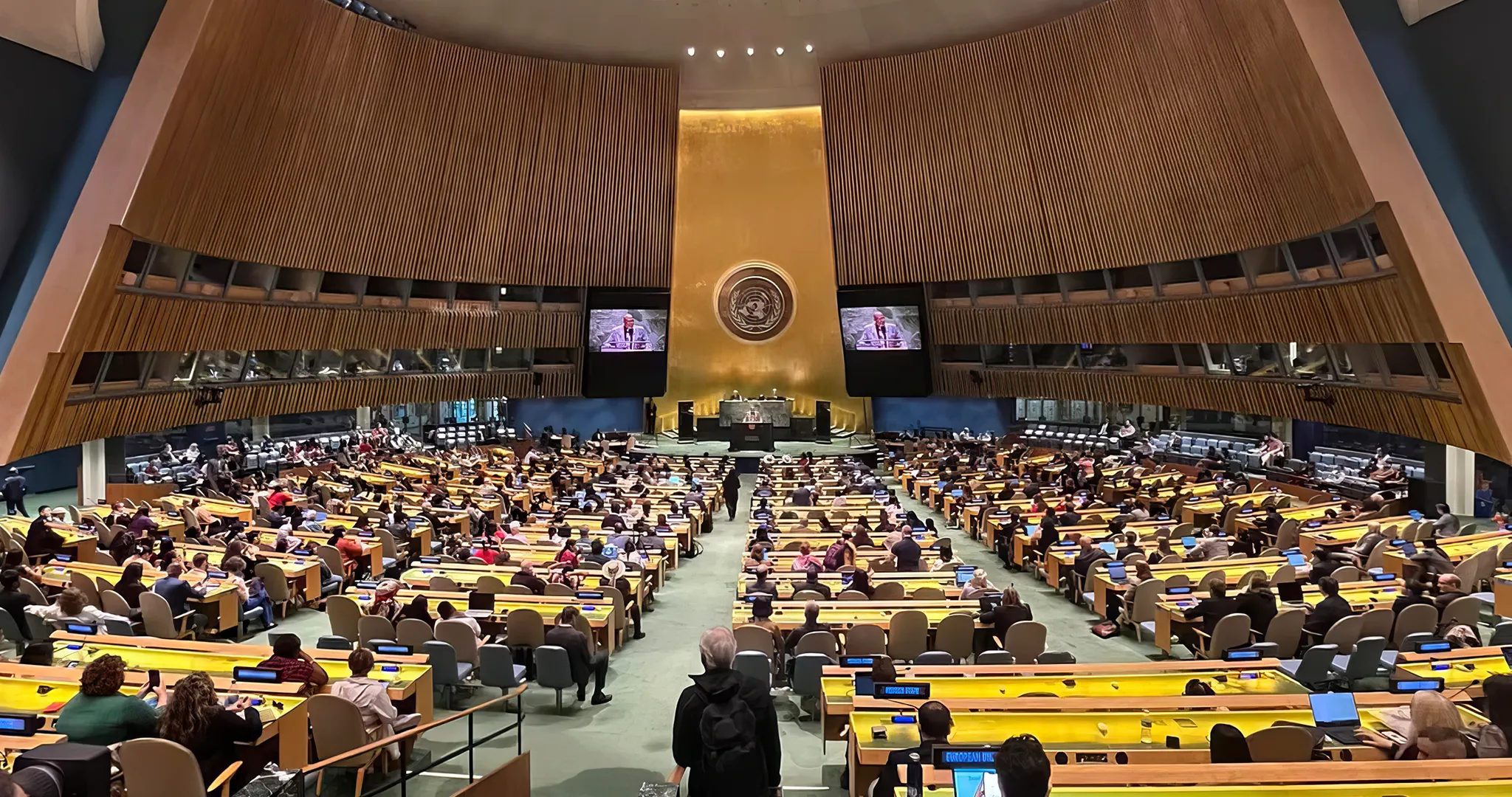
- The High-Level Political Forum on Sustainable Development held in New York is the central platform for the follow-up and review of the 2030 Agenda.
- This eight-day meeting is held annually in July under the auspices of the Economic and Social Council.
- A central pillar of the Forum consists of Voluntary National Reviews (VNRs)
in which States present their implementation of the 2030 Agenda and its development goals.
- A central pillar of the Forum consists of Voluntary National Reviews (VNRs)
- Canada underwent its voluntary review on July 17, 2019.
- The AFN was represented there by Grand Chief Wilton Littlechild.
Canada’s Progress:
- The second of the 2018 Spring Reports of the Commissioner of the Environment and Sustainable Development revealed that:
- the Government of Canada was not adequately prepared to implement the 2030 Agenda;
- no governance structure had been put in place;
- domestic consultation and engagement were limited;
- there was no implementation plan with a system to measure, monitor, and report on progress at the national level;
- Statistics Canada had developed a data framework to measure results for the 232 global indicators, but results were not available because this data had not yet been compiled.
Global Concerns:
- A major concern for Indigenous peoples regarding the implementation and monitoring of the MDGs was the shortage of disaggregated data dealing specifically with Indigenous peoples.
- Consequently, Indigenous peoples were invisible and absent from national reports and data collection.
- Lack of Indigenous input and perspectives regarding the goals and indicators.
On May 29, 2019, the AFN Executive Committee filed the following motion:
Motion No. 12 – International Advocacy Mandates
Motion: The AFN Executive Committee proposes to approve support for the implementation of the 2030 Agenda and advocates for Canada’s adoption of the American Declaration on the Rights of Indigenous Peoples.
Mover: Regional Chief Marlene Poitras, AB
Seconder: Regional Chief Terry Teegee, BC
Abstention: Regional Chief Bobby Cameron, SK
Motion Carried
Opportunities:
-
- Participate more actively in the High-Level Political Forum (HLPF) on Sustainable Development held every July at the United Nations.
- Guide the development of Canada’s National Strategy on the 2030 Agenda.
- Influence the national development of Canada’s data to ensure alignment with the principles of **Ownership, Control, Access, and Possession (OCAP) in research.
Possible Action:
-
- Request a mandate to capitalize on these opportunities.
-
Documentation:
- Canada’s Voluntary National Review – Report Summary