Approval of Action Plan by RTHC
| Liste des sigles | List of Acronyms | ||
|---|---|---|---|
| AEC | Attestation d’études collégiales | ABSCAN | Aboriginal Savings Corporation of Canada |
| APNQL | Assemblée des Premières Nations Québec-Labrador | AEC | Attestation of School Studies |
| CDEPNQL | Commission de développement économique des Premières Nations du Québec et du Labrador | AFNQL | Assembly of First Nations Quebec-Labrador |
| CNRC | Conseil national de recherches scientifiques | CMHC | Canada Mortgage and Housing Corporation |
| CoPH | Communauté de pratique en habitation | CoPH | Community of Practice in Housing |
| CRTL | Comité régional tripartite en logement | FN | First Nations |
| CSPNÉA | Conseil scolaire des Premières Nations en éducation des adultes | FNAESC | First Nations Adult Education School Council |
| DGSPNI | Direction générale des services de santé des Premières Nations et des Inuits | FNQLEDC | First Nations of Quebec and Labrador Economic Development Commission |
| GEM | Garantie d’emprunt ministérielle | FNQLSDI | First Nations of Quebec and Labrador Sustainable Development Institute |
| IDDPNQL | Institut de développement durable des Premières Nations du Québec et du Labrador | FNHIB | First Nations and Inuit Health Branch |
| PoCH | Point de contact en habitation | ISC | Indigenous Services Canada |
| PN | Premières Nations | ISC QRO | Indigenous Services Canada, Quebec Regional Office |
| R&D | Recherche et développement | MLG | Ministerial Loan Guarantee |
| SAC | Services aux Autochtones Canada | NRC | National Research Council |
| SAC BRQ | Services aux Autochtones Canada, Bureau régional du Québec | PoCH | Point of Contact in Housing |
| SCHL | Société canadienne d’hypothèques et de logement | R&D | Research and Development |
| SÉDAC | Société d’épargne des Autochtones du Canada | RTHC | Regional Tripartite Housing Committee |
Integration of the Draft Regional Housing and Infrastructure Strategy and the RTHC Action Plan
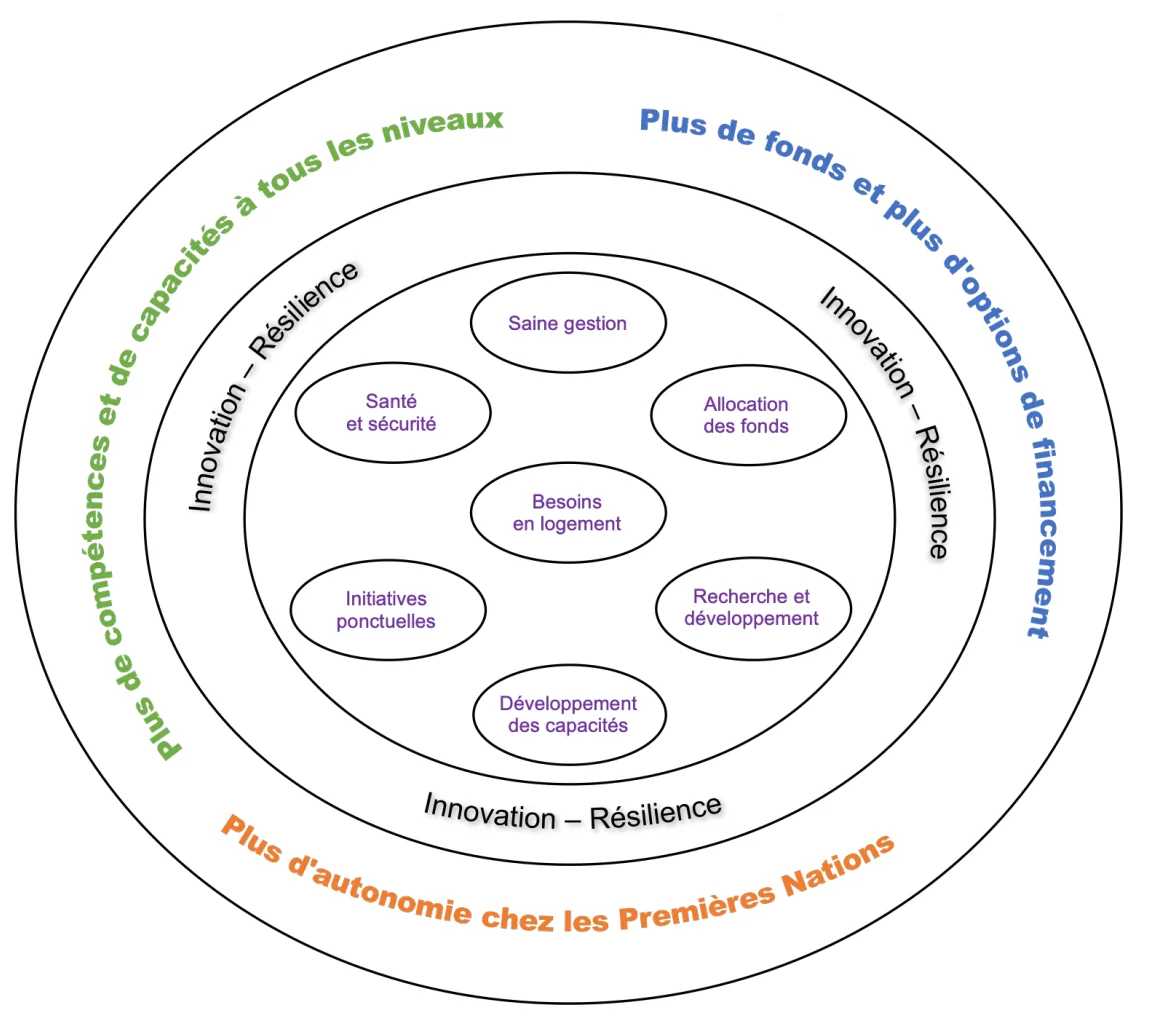
The Regional Tripartite Housing Committee (AFNQL – ISC – CMHC) is once again renewing its Action Plan since the mobilization began in 2016 and 2017 as part of the housing and infrastructure reform. The Plan renewed in 2025 aligns with the Regional Housing and Infrastructure Strategy.
Housing activities returned to their normal course in the years following the pandemic. It is more accurate to speak of a “new normal,” considering the explosion in construction costs and the labor and supply issues that First Nations must contend with more than ever. The Action Plan is therefore renewed with the goal of ensuring that the Committee’s actions contribute to improving the resilience of First Nations communities in Quebec to minimize the impacts of major events. The continued implementation of the Regional Housing and Infrastructure Strategy also aims to strengthen local skills and capacities to pave the way for closing the housing gap. The Plan, covering the years 2025 to 2027, follows this path. Furthermore, the Action Plan pays special attention to the recommendations of the 2024 Report of the Auditor General of Canada on Housing in First Nations Communities. Various actions refer to the 8 recommendations in the report and are marked as AG 2…
Pillar – more skills and capacities at all levels with innovation |
|
|---|---|
|
Background Increased skills and capacities are a prerequisite for achieving better results in the fields of housing and infrastructure. If the reform is to be successful, actors at all levels must, at a minimum, have the skills and capacities necessary to assume their roles and responsibilities. The global capacity-building initiative has been developed. This pillar has already been in its implementation phase for several years. |
Desired Outcomes (medium/long term) Leaders (elected officials) familiar with housing and infrastructure issues. Managers with adequate training to assume their duties. Occupants well-informed of their responsibilities as owners or tenants. |
| ACTIONS 2023-2025 | PERIOD | % | RESULTS / ACHIEVEMENTS | |||||||
|---|---|---|---|---|---|---|---|---|---|---|
| 2025-2026 | 2026-2027 | |||||||||
| Q1 | Q2 | Q3 | Q4 | Q5 | Q6 | Q7 | Q8 | |||
| Development of a capacity-building initiative | 100 % | Completed (2019) | ||||||||
| Assmue an advisory and promotional role with organizations responsible for the implementation of ongoing capacity-building initiatives | 25 % | |||||||||
|
||||||||||
|
Ongoing | |||||||||
|
||||||||||
|
Ongoing | |||||||||
|
||||||||||
|
Ongoing | |||||||||
|
||||||||||
|
Ongoing | |||||||||
|
||||||||||
|
Ongoing | |||||||||
|
Ongoing | |||||||||
|
The Manikaso Center is back in operation after a pause of several months. | |||||||||
|
Ongoing | |||||||||
| Support, as needed, the development of specific capacity-building initiatives | 25 % | |||||||||
|
||||||||||
|
Integrated work underway | |||||||||
| Support, in a concerted manner, the communities in improving health and safety | 25 % | |||||||||
|
||||||||||
|
Ongoing according to needs | |||||||||
|
Ongoing according to needs | |||||||||
|
Support of the ISC initiative by the Committee | |||||||||
|
Ongoing according to needs | |||||||||
| Support, in a concerted manner, the communities in research and development of solutions adapted to the particular challenges they face | 60 % | |||||||||
|
||||||||||
|
Completed (2019) | |||||||||
|
Upcoming | |||||||||
|
Upcoming | |||||||||
|
In progress | |||||||||
|
||||||||||
|
||||||||||
|
||||||||||
|
||||||||||
|
In progress | |||||||||
“`
Pillar – more funds and more financing options with innovation |
|
|---|---|
|
Background It is universally recognized that the level of investment must be substantially increased to achieve more positive results in housing and infrastructure. A better response to the needs of First Nations and the elimination of gaps necessarily require a catch-up initiative based on additional investment. We must also do more with government contributions and other sources of funding. One way to achieve this is through the universal implementation of practices that have been successful to date. Increasing government contributions, optimizing leverage with modern financing tools, and implementation focused on best practices are concrete ways to envision a catch-up initiative to better meet needs both inside and outside the communities. Optimizing local economic development opportunities is also an avenue to explore to support communities in their financial autonomy and job creation. Phase 1 (financial and economic analysis) has been completed. The second phase, which consists of the deployment of a Center of Expertise in Financial Literacy and Housing (CEFLH), is currently underway. |
Desired Outcomes (medium/long term) Elimination of the backlog, both on and off-community. Implementation of best practices. |
| ACTIONS 2023-2025 | PERIOD | % | RESULTS / ACHIEVEMENTS | |||||||
|---|---|---|---|---|---|---|---|---|---|---|
| 2025-2026 | 2026-2027 | |||||||||
| Q1 | Q2 | Q3 | Q4 | Q5 | Q6 | Q7 | Q8 | |||
| Phase 1 – Financial and economic analysis | 100 % | Completed (2020) | ||||||||
| Phase 2 – Dissemination of findings and recommendations from the first phase of financial and economic analysis (modern financing tools, partnerships, catch-up initiative (on and off community) and economic benefits) | 100 % | Completed (2022) | ||||||||
| Phase 2 (continued) – Implementation of the Center of Expertise in Financial Literacy and Housing (CEFLH), Manikaso Center | 25 % | The Manikaso Center is operational again after a pause of several months. | ||||||||
|
||||||||||
|
Ongoing | |||||||||
|
||||||||||
| Information dissemination | 25 % | |||||||||
|
||||||||||
|
Ongoing | |||||||||
|
Ongoing | |||||||||
| Preserve regional historical funding levels for social housing and renovation | 50 % | |||||||||
|
Ongoing until March 31, 2026 | |||||||||
| Housing needs report | 25 % | |||||||||
|
As needed | |||||||||
|
Ongoing | |||||||||
| Establishment of a common regional database for on-reserve housing stocks | ||||||||||
|
Initiated | |||||||||
|
Upcoming | |||||||||
| Support, in a concerted manner, the communities in improving health and safety | 25 % | |||||||||
|
||||||||||
|
Integrated work in progress | |||||||||
“`
Pillar – more autonomy for First Nations with innovation |
|
|---|---|
|
Background A better future will see First Nations assuming control over the governance and implementation of housing and infrastructure. First Nations want greater autonomy in the interaction and decision-making processes that lead to solving the housing and infrastructure challenges of their members living both on and off-community. Steps must be taken toward full and complete management by First Nations. At this level as well, capacity-building initiatives are called upon to play a fundamental role. Greater autonomy necessarily requires skills and capacities that are up to standard. Mobilization to date has shown that the development of new programs and initiatives, planning, management support, and networking are spheres of responsibility to be prioritized by any eventual First Nations organization operating beyond the local framework. The regional assessment also reveals that communities are not all at the same stage in their desire and progress toward autonomy. Some might want more housing responsibilities in the short or medium term, while for others, the perspectives are longer-term. It remains to be determined how to transfer responsibilities so that there is a real gain for First Nations. Possible orientations for governance depend on the analysis results and progress of the other two pillars of the Strategy. Simultaneously, support must be provided to communities that are willing and ready to begin reflecting on a transfer of responsibility. Furthermore, the Committee’s reflections on the transfer of federal responsibilities for housing and infrastructure will be inspired, notably, by the analysis being initiated by the AFNQL’s regional commissions and organizations (RCOs) on this subject. |
Desired Outcomes (medium/long term) Recognition of the full jurisdiction of First Nations. Communities adequately equipped for governance. |
| ACTIONS 2023-2025 | PERIOD | % | RESULTS / ACHIEVEMENTS | |||||||
|---|---|---|---|---|---|---|---|---|---|---|
| 2025-2026 | 2026-2027 | |||||||||
| Q1 | Q2 | Q3 | Q4 | Q5 | Q6 | Q7 | Q8 | |||
| Analysis of institutional development options | ||||||||||
|
||||||||||
|
||||||||||
|
||||||||||
|
||||||||||
|
||||||||||
| Support for communities | 25 % | Upcoming | ||||||||
|
||||||||||
| Awareness of sound planning practices | 25 % | |||||||||
|
||||||||||
|
Upcoming | |||||||||
|
Ongoing | |||||||||